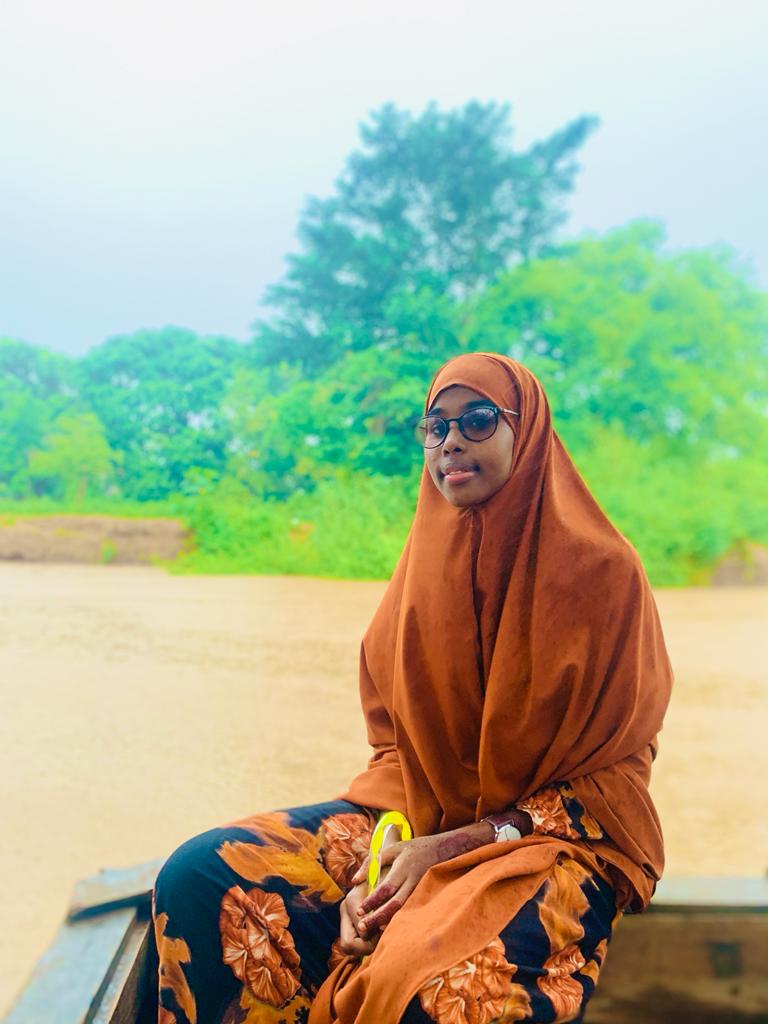
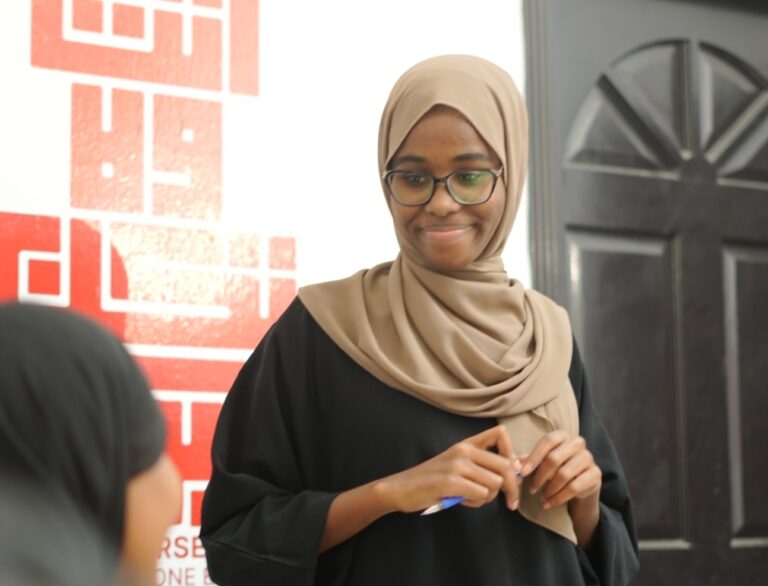
Being among people has always been my calling. I loved to listen, to laugh, and to connect. In those moments, back in my week with girls and women, my life became intertwined with the real experiences of women, sharing experiences that represent every Somali girl, wherever she may live. We spoke of everything, sharing stories that carried both pain and resilience.
Then came a moment that silenced the room. A woman stood up and spoke of her confrontation with her family. She reminded us of a phrase many Somali parents use to instill fear in their daughters: “far duco ama far habaar”, the hand of blessing or the hand of curse. But she chose the far habaar, and nothing happened to her. In that simple yet powerful defiance, she shattered a deeply rooted fear. The room seemed to breathe differently, as though courage itself had entered and taken a seat among us.
In our younger years, we were told to respect the elders, the relatives, and anyone older than us. No one taught us the difference between right and wrong. Above all, we were told that parents are always correct in every way. But here is the deeper truth we must confront: parents are not angels, and they are not always right. They must not impose life‑altering decisions upon their daughters or sons.
Marriage is meant to be a bond built on consent, not coercion. Every child has the right to refuse a marriage they do not want, and they are not cursed for doing so. From a religious perspective, Islam is clear. A marriage contract is only valid when both parties freely agree. The Prophet Muhammad (peace be upon him) taught that a woman cannot be married without her consent, and that her voice matters. That is why to challenge misinterpretations and harmful practices that we continue to normalize in our society, what I call dhoodhoob bulsho.
What makes this issue even heavier is how forced marriage has been normalized in Somali society, treated as tradition rather than oppression. Families pass it down unquestioned, wrapped in the language of honor and obedience. I remember a family conversation months ago when the case of Heblaayo came up. Someone casually mentioned that she had married Hebel. I was shocked and asked, “Is it that Heblaayo?”, because I knew she was only around 13. They confirmed it. You cannot imagine how disturbed and angry I felt at the toxic norms we continue to follow without reflection.
This normalization is dangerous. What makes it even more painful is that these stories are not rare. If it hasn’t happened to you, it has touched your cousin, your niece, your sibling, or someone close within your extended family. It is woven into the daily fabric of Somali households, passed quietly from one generation to the next.
The stories continued, one after another, each carrying its own heaviness. I was both amazed and moved by how these women and young girls had reached a point where they could finally speak. One moment left me deeply conflicted. A woman asked my age, and when I said “22,” she smiled proudly and said, “When I was 22, I already had five children.” She explained that she had been married at 14. In fact i felt torn,impressed by her resilience, yet deeply saddened by her story. I acknowledged her strength, but I also reminded her gently that what happened to her was not right, and that now she carries the responsibility to protect her own children from the same fate.
I shared my mother’s story with her. My mother had her first child at 18, never had the chance to go to school, grew up in a rural area, and was raised without a mother. Despite being illiterate, she raised me with determination and became the voice that pushed me toward education, and certainly marriage never came into my ears.
On the other side of the room, one woman insisted that arranged marriage had been good in the past, as our grandmothers had experienced it. She argued that FGM, girls should be cut was right. She spoke with nostalgia, believing the old ways held value, and with pride as she defended what she saw as girls’ dignity and the preservation of culture.
But then, a light of hope emerged. A young girl opposed her firmly, saying: “Even our grandmothers were forced. They didn’t give consent. The norm still exists, and nothing about it is good. I was cut, yet I will never allow my younger siblings to go through the same practice.” I was silently saying ‘what a relief!’ I listened, moderated, and watched perspectives collide. Isn’t it fascinating that change is happening in the minds of young people?
Forced marriage is not merely a personal struggle; it is a societal wound that has been normalized for far too long. When nearly every family carries such a story, it becomes a collective trauma. The stories shared today revealed both the pain of those who endured and the courage of those who resisted. Religion teaches us that consent is sacred. Justice cannot coexist with coercion. Culture, too, must evolve to protect dignity rather than destroy it.
What inspires me most is the shift we are beginning to see, young people questioning traditions, women reclaiming their voices, and communities daring to confront uncomfortable truths. Change is happening. It may not yet be sweeping or dramatic, but mindsets are beginning to shift. Voices, behaviors, and lifestyles are starting to resonate with others. From that recognition comes responsibility, the responsibility to take it seriously, to understand that you are part of a society now striving to rise. Let us not just focus on fixing the broad issues. Change begins in conversations like these, where silence is broken and minds are opened. If every household carries a story of social burden, then every household must also carry the responsibility to end it.